
How to Search Criminal Dockets
The North Carolina eCourts Portal is where online public searches for Duplin criminal cases happen. No registration is needed for an ordinary search. A verified case number works best. Without one, Portal takes a party name typed Last, First. Then you can filter by criminal or infraction after the first pass. The system covers the whole state. Apply the location filter and confirm Duplin. Only then treat a hit as a Duplin criminal docket.
Treat the result as a log of court events. It is not a verdict based on a name or a charge label. Click an underlined case number to open the Case Summary and Register of Actions. When the public view runs thin, try a public-access terminal, a retained file, or a copy request through the Duplin County Clerk of Superior Court. Certified documents come from the Clerk alone, never from a Portal printout.
- Open Portal Smart Search and enter a verified criminal case number when available.
- If a name is necessary, use the documented Last, First format and check spelling before broadening the search.
- Confirm the Duplin location, case type, and displayed case context before opening a result.
- Read the Case Summary in date order, including hearings, events, dispositions, and financial information where shown.
- Ask the Clerk for a certified docket, judgment, or public filing when an official copy is needed.
Duplin Criminal Portal Workflow
Portal's advanced filters can only refine a search that already exists. They stand alone poorly. Enter a case number or a tight party search first. Pick Duplin. Then add a supported criminal status, case type, or filing-date filter if it helps. Want a surname wildcard? The official guide allows an asterisk after at least three typed surname characters. It widens retrieval without proving that similar names belong to the same case.
For a scheduled hearing, open Search Hearings. Pick the Duplin location. Choose a hearing category and search type, fill in the required matching field, and give both ends of a date range. A hearing result is a setting, not a promise of call order. Check it against the official Duplin criminal calendar and look again near the date.
North Carolina's recovery-courts information lays out a court-supervised program model. That model can change how underlying cases are handled.
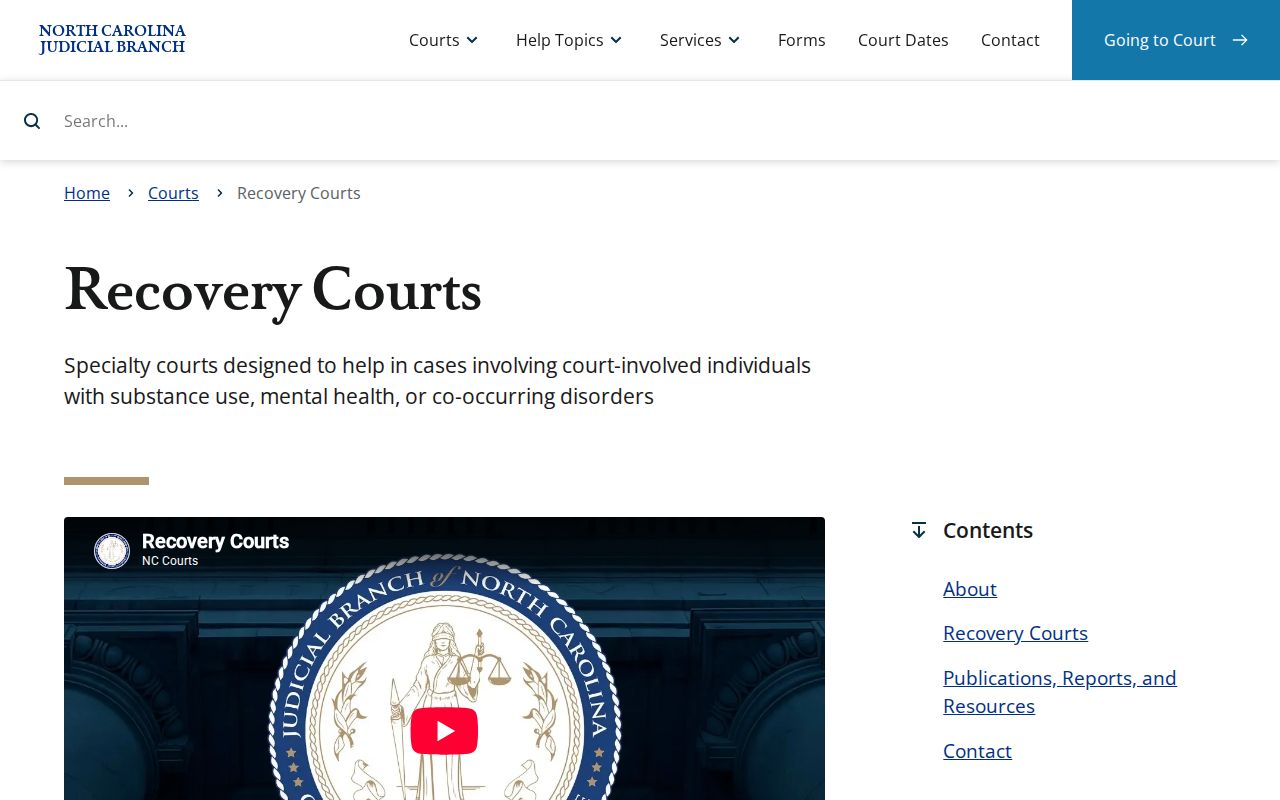
No official source names a dedicated recovery or specialty docket sitting in Duplin County. Don't read program participation into a treatment, compliance, or probation entry. Check the underlying Duplin criminal record, and ask the right court office whether any public scheduling record exists.
What a Criminal Docket Shows
A public Duplin criminal Case Summary can display case information, assignment details, parties as permitted, case events, and hearings. Dispositions and financial information can appear as well. Not every record shows every panel. A single listed event might be a filing, service action, setting, continuance, or plea. It might also be a judgment, sentence, appeal, or a payment update. The later disposition or judgment is the safer place to learn how a charge ended.
| Case number | The court identifier, often following the statewide four-part convention. A format such as 25-CRS-000001-031 is illustrative only; copy the actual number from a confirmed record or notice. |
|---|---|
| Case events | Dated court actions, filings, service, calendar activity, or other procedural entries. |
| Hearings | Scheduled court events with available setting information. A hearing is not necessarily a trial. |
| Disposition | The recorded result of a charge, motion, or case, when a public disposition is displayed. |
| Financial information | Amounts or payment information the interface makes available, which may change and should not be read as a current balance without verification. |
Portal hides some data from ordinary public users, including parts of a displayed date of birth. Rely on the file number, court location, case type, and event history to tell cases apart. Skip the urge to gather personal identifiers from similar-name results.
Duplin Criminal Case Codes
Short entries on a Duplin criminal docket need context. The state's criminal-record-search materials define terms that signal the procedural stage, yet a code alone never answers a legal question. Read the surrounding date, event, and later disposition together. The official AOC-CR-314 form carries the fuller state glossary for codes on a certified search result.
- CR / CRS
- Criminal case coding. CRS commonly denotes Criminal Superior Court in the official search glossary.
- Disposition
- The recorded result of a charge or proceeding, not merely the first allegation or court setting.
- PJ
- Prayer for judgment continued, a specific court notation that is not simply a generic dismissal.
- TD
- Trial de novo, the new Superior Court trial route that may follow a District Court misdemeanor or infraction appeal.
- Pending Expungement
- A Portal status in an expunction-related process. It does not prove an expunction has already been completed.
North Carolina's juvenile-record statute allows far less public access than ordinary criminal docket viewing.
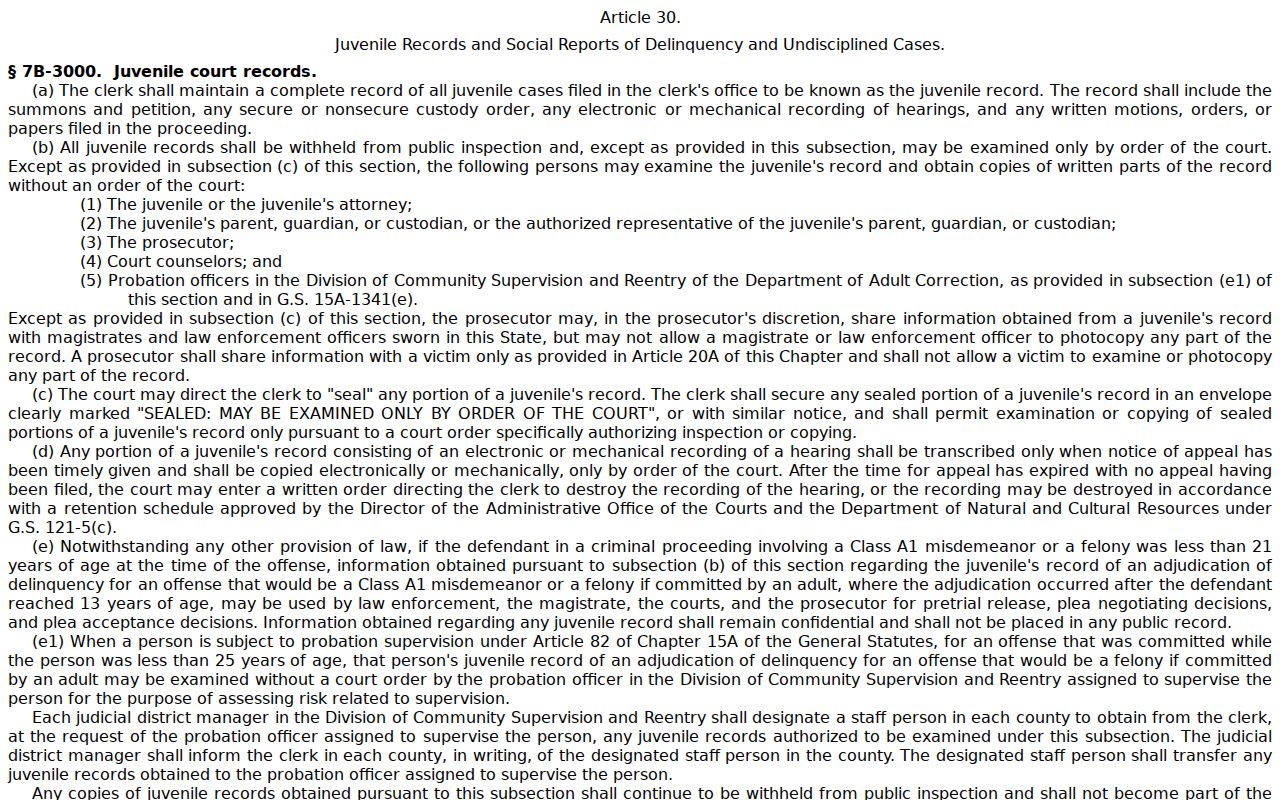
A juvenile record is not a public result gone missing, so alternate searches will not unlock it. The Clerk keeps it under confidentiality rules. Only the people and orders the statute allows may see it.
Stages on a Criminal Docket
A Duplin criminal case can run from charge or filing to initial appearance, service or process activity, continuances, probable-cause action, indictment events, plea or trial, judgment, sentence, restitution, probation entries, appeal, dismissal, or compliance updates. Charge and court division shape the order. A setting or continuance line is procedure only, never a final outcome.
Docket flow: Filing or charge → initial setting → arraignment or pretrial activity → plea or trial → disposition → sentencing or follow-up entries.
Note: Hearings get moved, continued, or settled without any trial, so a list of court dates is not a verdict. Match the sequence of events on the docket against the disposition the court actually recorded.
Duplin Criminal Trial De Novo
Duplin District Court tries misdemeanors and infractions first. Superior Court handles felony criminal matters. A misdemeanor or infraction conviction in District Court can be appealed for a trial de novo in Superior Court. That appeal means a brand-new trial, not a review of a fixed record by the Court of Appeals. It may spawn a related Superior Court sequence worth searching.
That applies whenever a criminal Register of Actions shows an appeal, transfer, or TD notation. Hold on to the original case number. Then hunt the related Duplin Superior proceeding through Portal or the Clerk. The Superior Court overview confirms its felony jurisdiction. The District Court overview describes the misdemeanor and infraction role.
Which Court Holds Criminal Dockets
Duplin County sits inside North Carolina's unified General Court of Justice. The Duplin County Clerk of Superior Court is Katie Harrell. She keeps the local trial-court records. They cover Superior and District cases alike. Two public routes lead to those Register of Actions records. One is Portal; the other is the Clerk's office itself. Magistrates handle some preliminary criminal work. However, no separate county docket system sits behind their counter for public case research.
| Duplin court level | Criminal docket role | Public lookup path |
|---|---|---|
| Superior Court Division | Felony criminal cases and qualifying District Court trial-de-novo appeals. | Portal after confirming Duplin, or the Duplin Clerk. |
| District Court Division | Misdemeanors, infractions, and other District-level criminal proceedings. | Portal, official criminal calendar, or the Duplin Clerk. |
| Magistrate matters | Selected preliminary criminal actions and initial matters. | Duplin Clerk and Portal where the matter is public and available. |
None of the towns in Duplin County runs its own municipal trial court. Wallace, Warsaw, Rose Hill, Beulaville, and Magnolia all send criminal matters into the same Duplin court structure. A state charge arising in any of them belongs there.
Duplin Criminal Calendar Checks
Two tools cover Duplin County criminal court dates, and each does a different job. The published criminal calendar shows official county-filtered settings. Portal Search Hearings works the other way. Enter the required Duplin location and date range first. Then search by case number, party, business, attorney, judicial officer, or courtroom. When a court date truly matters, check both channels. Then ask the Clerk if a case is missing or a courtroom needs confirming.
The calling order belongs to the clerk, not the calendar. Sessions often stack several matters together, especially traffic and misdemeanor cases heard in one block. So a listed order is not a promise. It does not tell you when the court will call your case. The Duplin court calendar walks through the date-check process for civil and criminal settings alike.
Public Access and Sealed Criminal Dockets
North Carolina opens clerk-maintained files, dockets, and indexes to public inspection, within legal limits. Portal may display public criminal information with no account required, though it warns that its display is not the official court record. Sealed, expunged, juvenile, and unreturned-warrant matters stay out of ordinary public access. Remember that. An empty search result does not prove that no court event ever existed.
Key access rules:
G.S. 7A-109 directs clerks to maintain public files, dockets, and indexes except where law prohibits access.
G.S. 132-1 states North Carolina’s general public-record policy.
G.S. 7B-3000 limits public inspection of juvenile records.
G.S. 15A-145 is one statutory expunction pathway that can affect ordinary public visibility after an order.
The expunction statute shows why public access can change after a court order.
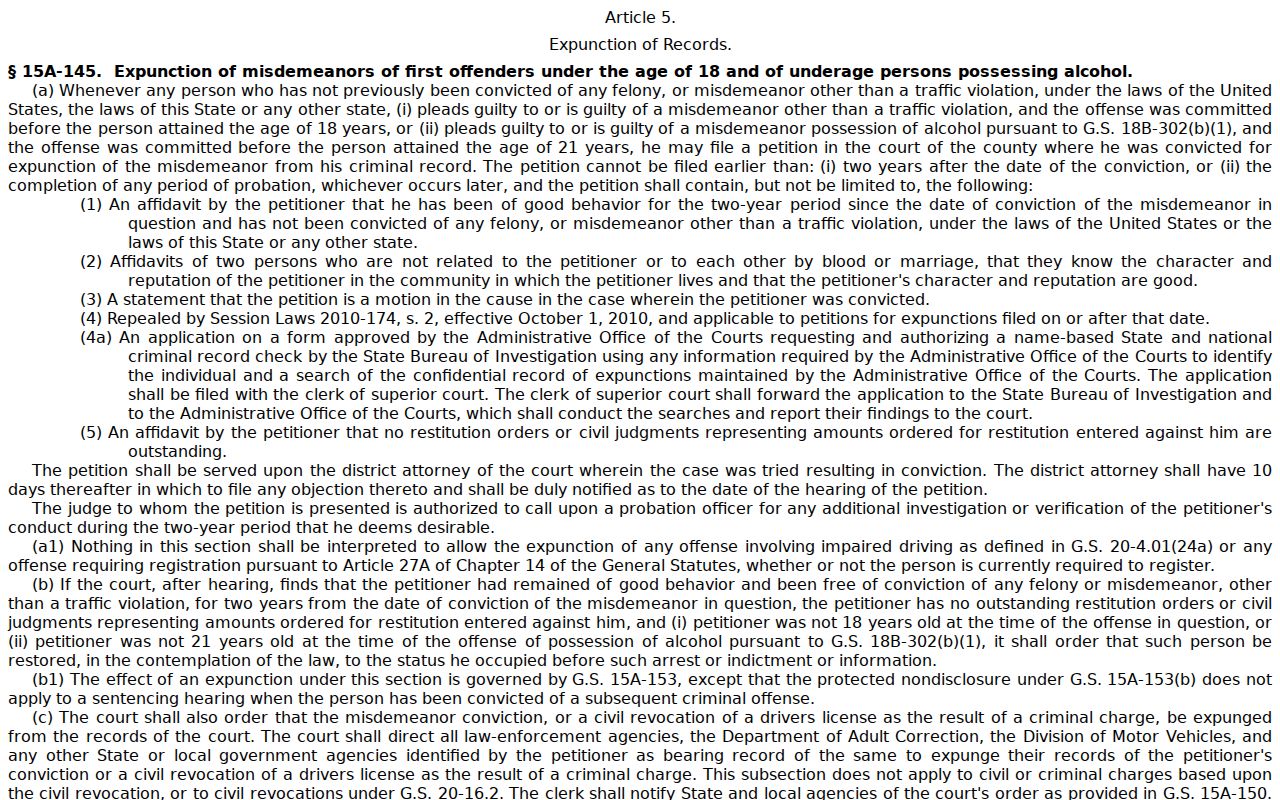
Never try to slip past a restriction through name variations, cached copies, or a town office. Ask the custodian instead. The custodian can explain what nonrestricted record exists and the proper process for getting the document you want.
Duplin Criminal Clerk Access
Portal does not always answer a criminal docket question. When it falls short, the Clerk's counter is the Duplin fallback. It handles inspecting public files, using the public access terminal, tracking older records, and ordering copies. Bring a case number if you have one. Name the division, document, and date range you need. The official terminal searches public criminal material by defendant name, case number, victim, or witness. Confidentiality limits still apply there. For a certified criminal-record search, use form AOC-CR-314. The statewide help topic lists it at $25.
Duplin County Clerk of Superior Court
Duplin County Courthouse
112 Duplin St.
Kenansville, NC 28349
Mail: P.O. Box 189, Kenansville, NC 28349
Weekdays, 8:30 a.m. to 5:00 p.m.
910-275-7000
Call ahead before traveling, for copy procedure, division, or calendar routing. Court staff cannot interpret the law for you. For written requests or permitted mailed payment, use the mailing address. Follow the Duplin payment instructions; that page warns against mailing cash or personal checks. File & Serve is the eFiling path for case participants, not a public-reading interface. The statewide Judicial Branch public-record request covers records NCAOC holds. So it cannot replace a local Duplin case-file request.