
How to Get Court Records
Duplin County court records sit in one office. The Clerk of Superior Court, Katie Harrell, holds them within the unified state-court system. Her office keeps the local Superior Court, District Court, and magistrate files. Estate and special-proceeding records sit there too. Start with the North Carolina eCourts Portal. It displays public Case Summary information along with any public documents in an eCourts case. From there, pick the local channel that fits your request.
- Identify the Duplin case number, division if known, and the exact record wanted. A dated judgment, complaint, or Register of Actions is easier to locate than a broad request.
- Use Portal for public case information. Ordinary public Portal access is account-free, but its display is not a certified court record.
- Visit the Clerk at the courthouse for public-file access, a public terminal, copies, or help with a current local procedure. Older files may require clerk assistance.
- Call 910-275-7000 before traveling or mail a precise written request to P.O. Box 189, Kenansville, NC 28349 when the applicable procedure permits a mail request.
- Ask about the page count, cost, payment method, pickup or mailing procedure, and whether a plain, certified, or exemplified copy is needed. Do not mail cash or personal checks.
The Judicial Branch public-record request form reaches existing agency records held in NCAOC custody. It is not the route for a local Duplin docket, judgment, transcript, or case-file copy.
Duplin County Court Records: Docket or Document
A Register of Actions is really just an index. It lists every event in a case in order, and that is its whole job. A court record is broader. Behind those entries sit initiating papers, service documents, motions, notices, retained public exhibits, orders, judgments, transcript materials, financial records, and clerk certifications. One caution matters here. An entry showing that a document was filed does not guarantee the full document is online, or even public. The Judicial Branch's court-records access guidance lays out the split among Portal, clerk-office terminals, paper files, and copy service.
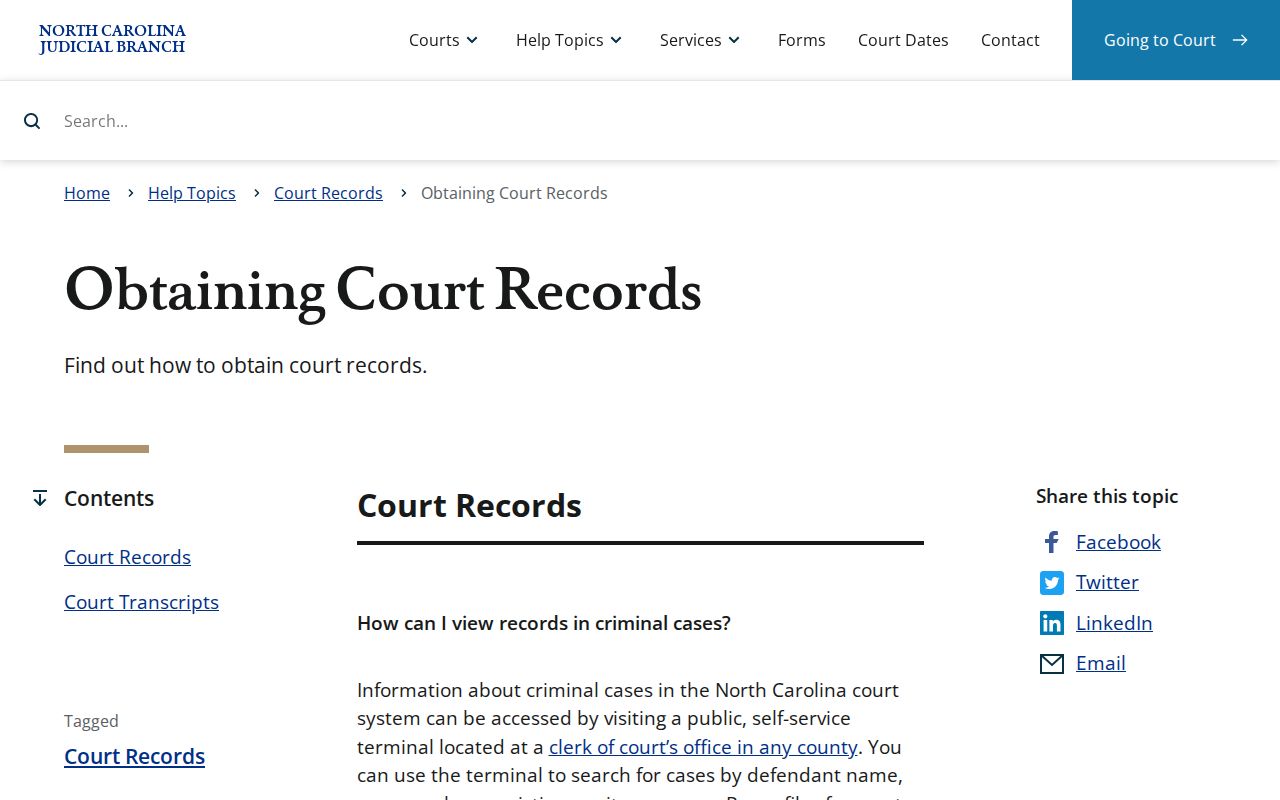
For a Duplin County case, the event history tells you what exists. The Clerk then decides whether the document you select is public and copyable. Keep one limit in mind. A docket entry pointing to a document does not make that whole document publicly available.
Types of Court Records
Access rules and the case type decide the answer. What counts as a public Duplin County court record depends on those factors. In an eCourts case, Portal may display public information plus available documents. Older files are different. Ask the Clerk about the right path. It may be a paper file, a retained document, or a local copy request. The categories that follow describe the items usually sitting behind a docket entry.
- Register of Actions or Case Summary event histories.
- Complaints, citations, petitions, answers, and other initiating or responsive papers.
- Orders, judgments, dispositions, and sentencing records when public.
- Notices, service records, motions, and public filing attachments where available.
- Clerk certifications, certified copies, exemplifications, and criminal-record search results.
A category tells you what kind of file item something is. The Clerk still decides its current public-access status.
Duplin County Court Records: Choose the Correct Custodian
Duplin County has one clerk structure. Still, that does not place every public document in a court file. The Duplin Clerk keeps the local trial-court record. Appellate clerks hold appellate records. Other records answer to other offices. The Register of Deeds keeps deeds and powers of attorney. Vital-record channels handle birth, death, and marriage certificates. Law-enforcement agencies keep their own reports, and town offices hold municipal records. A court case can mention any of these items without shifting custody to the Clerk. The Judicial Branch's request-a-public-record information draws the line between agency records and local court documents.
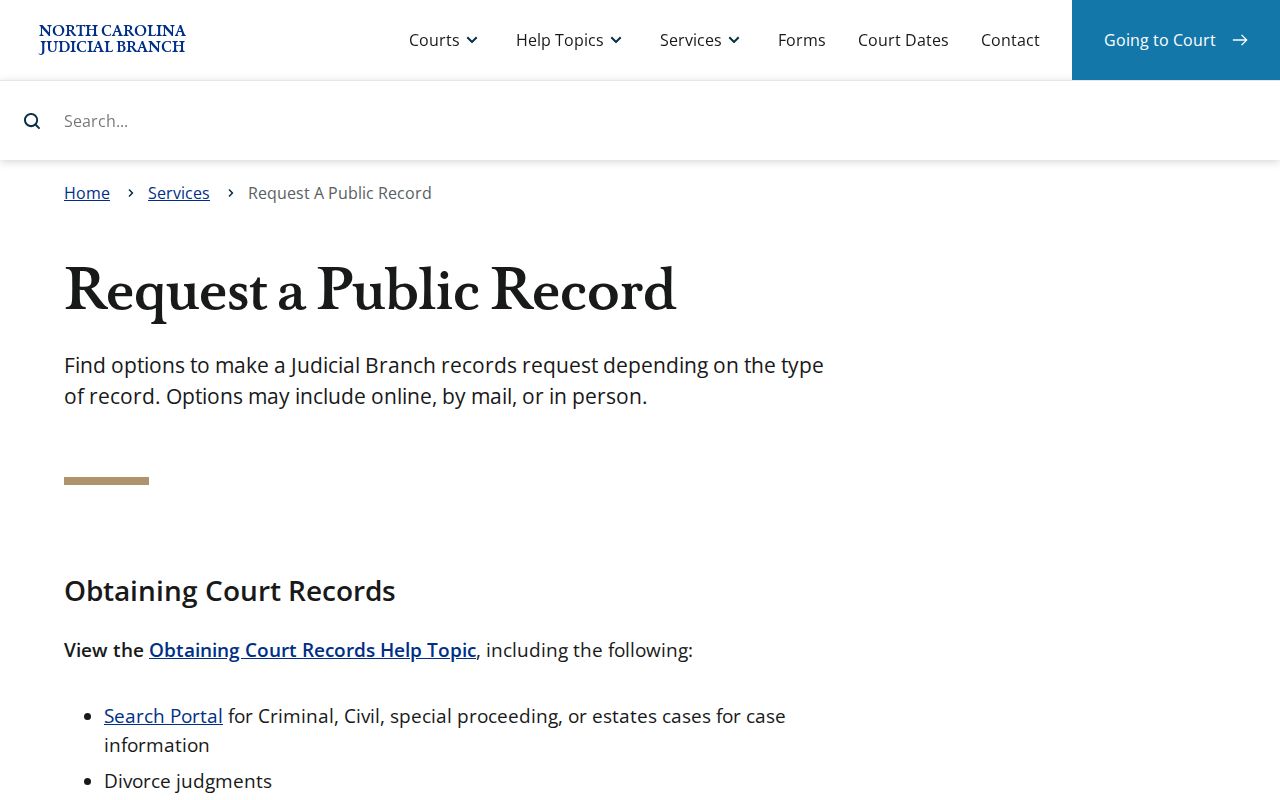
Send a Duplin request to the office that actually holds the record. That alone prevents delays. It also keeps you from asking an office to build a compilation it was never meant to create.
What a Court Record Contains
No Duplin County court record holds more than its own file allows. Case Summary can identify the case, the court location, parties as permitted, assignments, events, hearings, dispositions, and financial information. The file behind it may contain the document that produced a given event entry. Expect gaps. Fields, documents, or panels can be missing because no data exists, because the item was never scanned, or because access is restricted.
| Case identification | File number, case type, court, location, and case caption or parties as permitted. |
|---|---|
| Register of Actions | Chronological filings, service, settings, court events, and related procedural activity. |
| Orders and judgments | Signed rulings or recorded outcomes when the document is public and available. |
| Hearing and disposition data | Scheduled settings and recorded results that must be read in sequence. |
| Financial information | Case financial data where present, not a substitute for a current payment instruction. |
Public Duplin Case Summary information is a locating tool. It does not replace the underlying official record.
Duplin County Court Records: Portal, Terminal, Paper
Portal is the online public reader for eCourts counties. Yet it is not the only route to Duplin County court records. Public-access terminals in the Clerk's office give you a courthouse search option. Paper files and clerk copy service still matter, especially for older material. A portal printout can help identify a filing. A certified local record comes only from the county where the case was filed.
Duplin moved to Portal, Enterprise Justice, and eFiling in February 2025. File & Serve handles court filings; it is not a public-reading substitute. If an older public document is missing online, ask the Clerk a question. Does it sit in paper form, need a more specific request, or fall under a restriction? Each channel, whether terminal, paper, or Portal, locates Duplin court information differently. Access can differ too.
Certified Copies and Fees
Ordinary copies, certificates under seal, and exemplifications serve different purposes. Each carries its own fee. An ordinary copy is simply a reproduction of the public document. A certificate under seal is a clerk certification of it. An exemplification is a separate statutory service. Say which format you need before ordering. Then ask the Clerk for the current total, including any mailing cost or payment requirement.
| Duplin court-record service | Statutory fee |
|---|---|
| First page of a document | $2.00 |
| Each additional page of that document | $0.25 |
| Certificate under seal | $3.00 |
| Exemplification | $10.00 |
| Criminal-record search | $25.00 |
G.S. 7A-308 is the statutory fee reference for these court services.
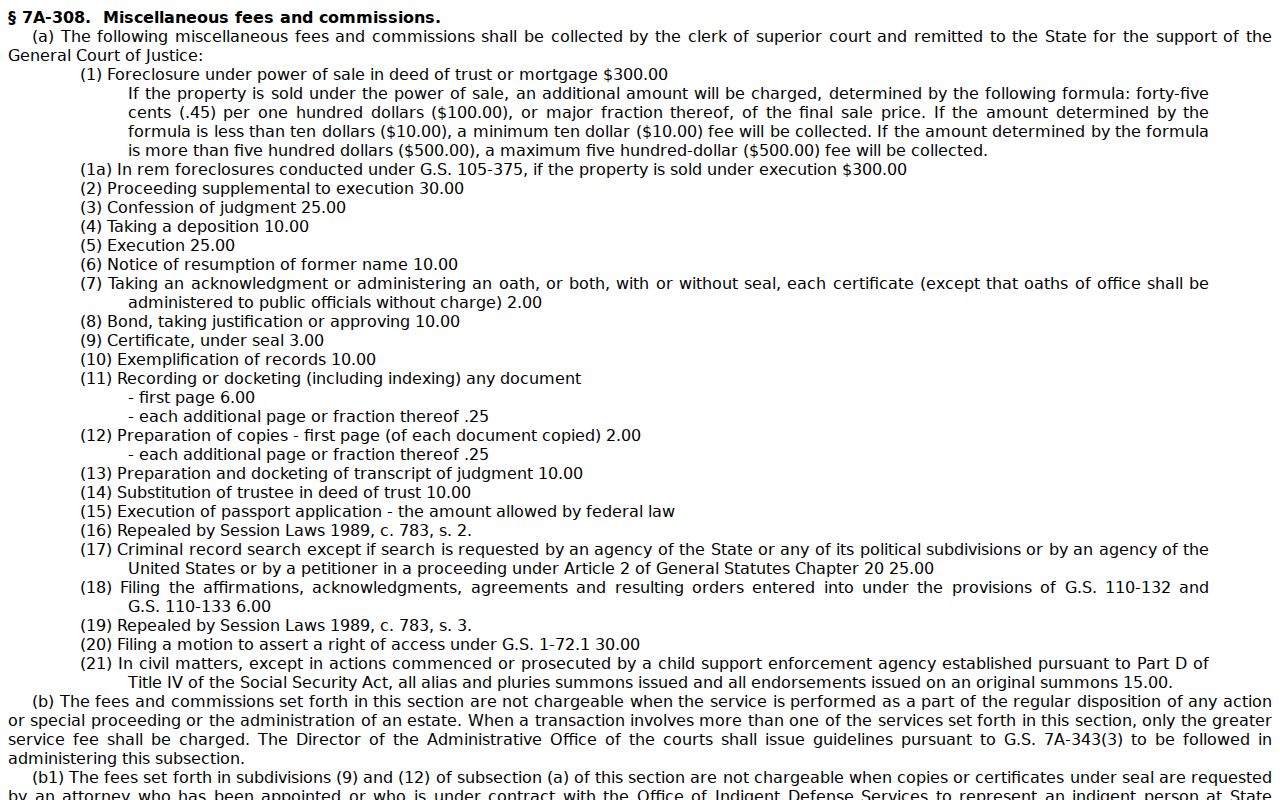
Treat these amounts as base reference points, not a quote for every copy, search, or mailing request.
Duplin County Clerk of Superior Court
Duplin County Courthouse
112 Duplin St.
Kenansville, NC 28349
Mail: P.O. Box 189
Kenansville, NC 28349
910-275-7000
Confirm the page count and copy type with the Duplin Clerk. Do that before mailing payment or expecting a certified record.
Duplin County Court Records: Make a Request Specific
Be specific when you write to the Duplin Clerk. A precise request helps staff pull the right file. It also lets them judge whether it is public and size up the copying work. Include the Duplin case number and the division if you have them. Say exactly which document you want. That could be a complaint, a signed judgment, an order, the docket or Register of Actions, a sentencing record, or some other dated filing. Also say which kind you need: an ordinary copy, a certified copy, or an exemplification.
Mailing a request? Give enough detail to locate the court record. Pay only in a way the local payment procedure allows. Duplin's payment information is blunt on one point: do not mail cash or personal checks. Do you know the page count, the total, or whether the filing even exists? If not, ask before you send any money.
Note: A dated document in one numbered Duplin case is far easier to find. A sweep for every record about a person is not.
Duplin County Court Records: Plain, Certified, Exemplified
Copy types matter in practice. A plain copy works fine for reading a public filing. A certified copy carries the Clerk's seal. An exemplification is its own service with its own statutory fee. Portal helps with research, but the Portal FAQ is clear on two points. It is not the official court record. Portal cannot issue certified copies. The Judicial Branch court-costs resource posts the current fee information for every service.
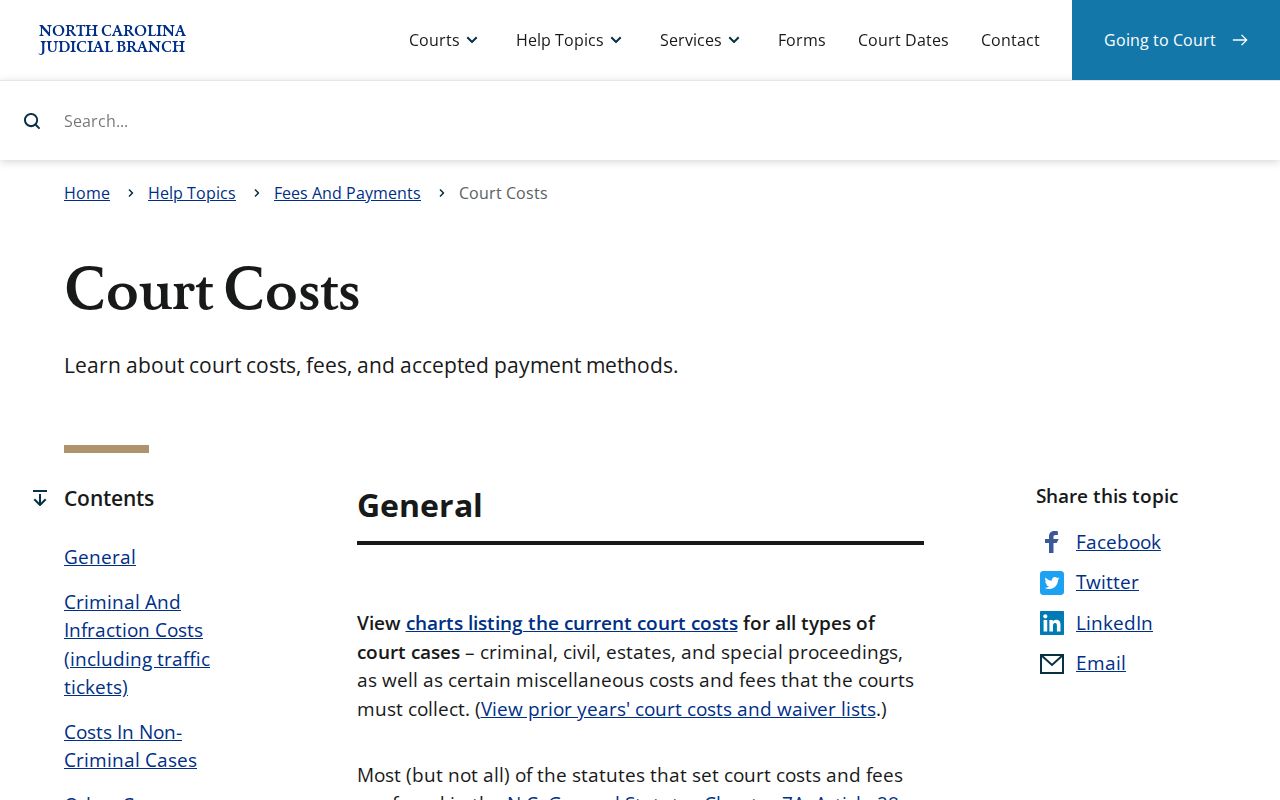
Check the format and the exact total with the Duplin Clerk first. Fees and mailing rules shift, so verify before you send anything.
Public Access and Sealed Records
North Carolina leans toward openness, but "public" does not mean every court record downloads or every field shows. The Duplin Clerk keeps files, dockets, and indexes open to inspection unless a statute, court rule, confidentiality provision, sealing order, or expunction law says otherwise. Redaction can also strip protected identifiers from the public version, so what you see may be less than what the file holds.
Key Rules:
G.S. 7A-109 requires the Clerk to maintain files, dockets, and indexes that are open to inspection unless law provides an exception.
G.S. 132-1 states North Carolina's general policy favoring inspection and copies of public records.
G.S. 132-6.2 limits a public-record request to existing records and does not require a new report or compilation.
G.S. 7B-3000 gives juvenile files a far narrower public-access rule.
Duplin County Court Records and NCAOC Requests
The NCAOC public-record request form covers only existing Judicial Branch records. Those are records the NCAOC itself holds. Its own page says so plainly. NCAOC is not the custodian of local court documents or local case information. So it cannot fill a Duplin request for a complaint, judgment, transcript, docket, or case-file copy. Those belong with the Duplin Clerk.
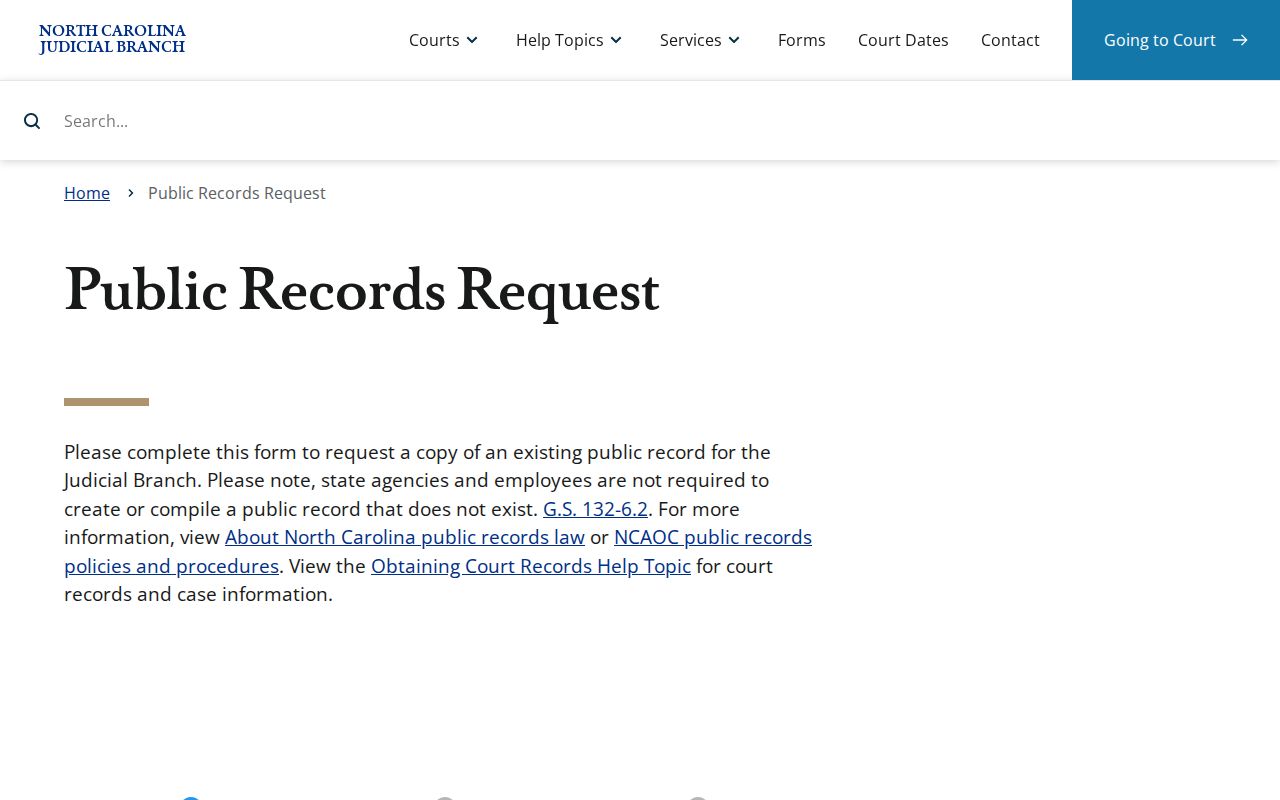
If you need a statewide administrative record that NCAOC truly holds, describe the existing record in enough detail to locate it. Custody decides the route, not convenience.
Duplin County Court Records: Redaction Has Limits
G.S. 132-1.10 provides a route for redacting specified personal identifiers, including Social Security, taxpayer, driver-license, passport, financial-account, card, and PIN or password information. A redaction does not make the whole record secret. It can explain why a public Portal document or copy is less complete than the original court file.
NCAOC public-record policies and procedures describe the agency's handling route for its own records.
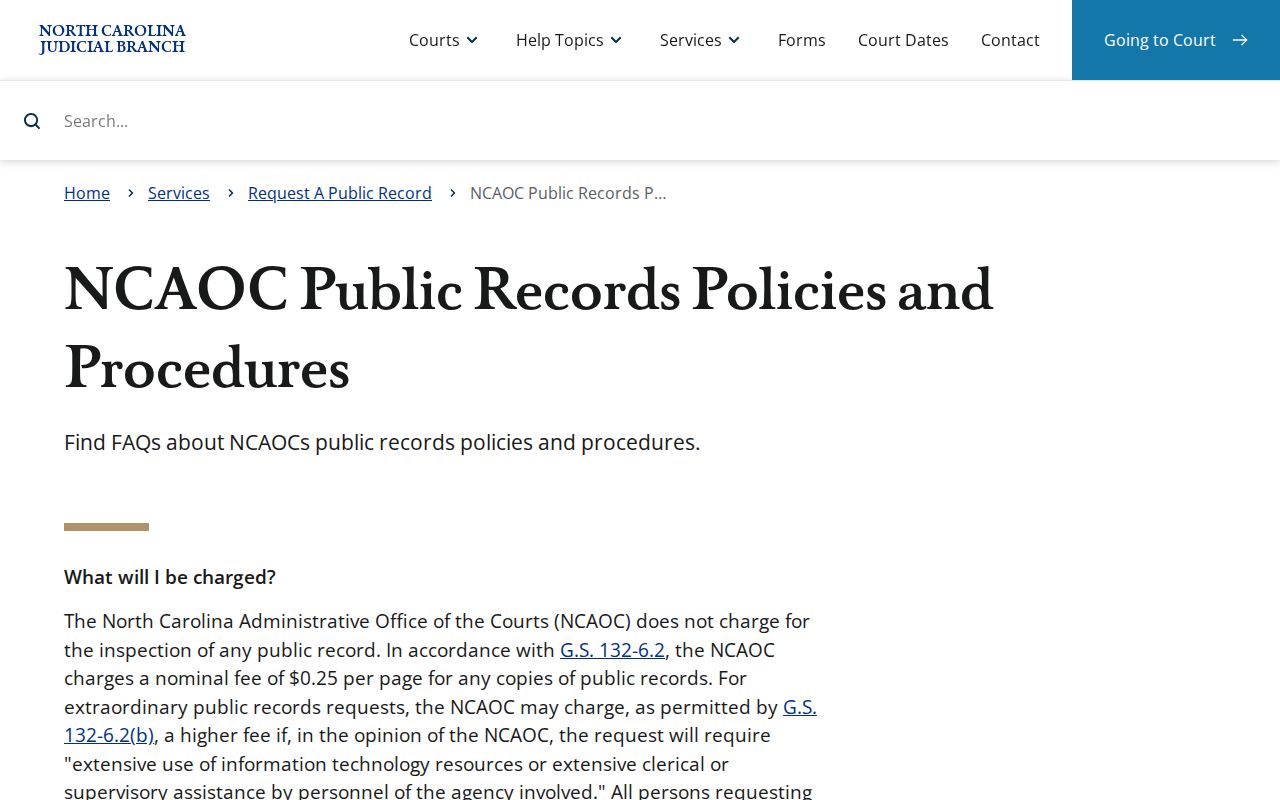
If a Duplin record comes back redacted, sealed, or unavailable, ask the local office for the lawful basis. Work with the process rather than around it.
Duplin County Court Records After eCourts
Duplin joined eCourts on February 3, 2025. Portal, Enterprise Justice, and eFiling became local tools that day. Portal is now the natural first stop for public Duplin case research, yet the change did not hand the Clerk's official recordkeeping role to a website. The Clerk still rules on local certifications, access to retained files, and record-specific questions.
Not all older Duplin material is scanned or visible in public Portal access. The courts promise no set share of older papers online. Start with Portal, then take any older-record or copy question straight to the Clerk.