
How to Search Civil Dockets
For Duplin County civil cases, the public search point online is the North Carolina eCourts Portal. Bring a verified file number if you have one. Searching by party works best with the documented Last, First syntax. Narrow the results only after the first set appears. Portal covers the whole state. Applying the Duplin location filter is therefore a key verification step. The display helps you find a Case Summary or Register of Actions. It is not the official certified court record.
Portal can return public civil information by party, case number, attorney, business, or cross-reference. Need an older file, a missing document, or an official copy? Turn to the Duplin County Clerk of Superior Court. The Clerk keeps the local trial-court files. Staff can explain how to inspect or copy the case you identified.
- Open Portal Smart Search and enter a verified Duplin case number if one is known.
- For a name search, confirm spelling and use the documented Last, First format.
- After results appear, select or confirm Duplin and narrow by an available civil type, status, or filing date.
- Open the matching case number and read the Case Summary from the earliest relevant event through the newest entry.
- Contact the Clerk for a public document, retained file, or certified copy rather than relying on an online printout.
Duplin Civil Portal Filters
Filters sharpen a result set you already have. They do not fill an empty search. The Portal guide notes that an advanced party-name filter can narrow results. Run a simple Smart Search text query first. Then refine by Duplin location, case type, status, or filing date. Civil categories on the docket include several types. These cover Civil General, Civil Magistrate, Civil Foreclosure, Bond Forfeiture, Confession of Judgment, Non-Domestic Restraining Orders, and Summary Ejectment.
| Portal field | Practical civil use | Important limit |
|---|---|---|
| Smart Search text | Start with a case number or documented party-name format. | A broad name result is not identity confirmation. |
| Location | Confirm Duplin in the statewide result set. | Location should not be skipped because a party has a Duplin address. |
| Case type and status | Narrow a result after the initial search. | Filters cannot stand alone and status is not a full case explanation. |
| Case Summary | Review events, hearings, dispositions, and causes of action where present. | Not every panel or document is public or available online. |
The Superior Court overview lays out the general-jurisdiction civil role this court plays across Duplin County's unified system.
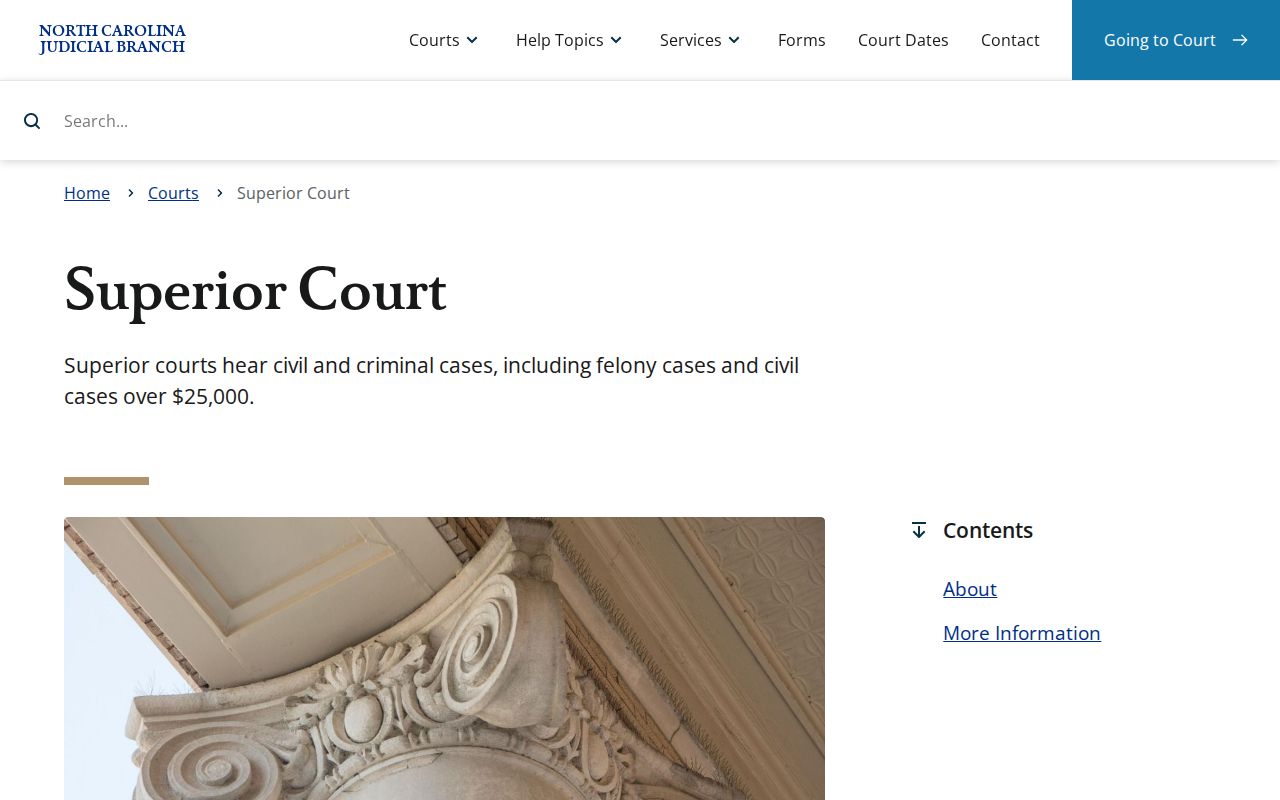
Superior Court is one civil division, not a separate Duplin County database. When a case is public and available, its Duplin records still come through Portal or the Clerk.
What a Civil Docket Shows
A Duplin civil Case Summary can display case information, assignment information, parties as allowed, causes of action, case events, hearings, dispositions, and financial information. The causes-of-action panel earns special attention. It separates the civil category from the procedural history that follows. A record may show a filed complaint, service, a motion, a scheduled hearing, or an order. None of that guarantees a final trial judgment.
| Case number | The court’s identifying number. Use the exact number from a confirmed notice or record, rather than creating one from a case label. |
|---|---|
| Causes of action | Claims or grounds the Portal may display for civil, family, probate, or mental-health matters. |
| Case events | Dated filing, service, motion, calendar, order, or other procedural activity. |
| Hearing and setting | A scheduled court event that may later be continued, held, or resolved by another event. |
| Disposition | A recorded result where one has been entered. Read it with the event history and any public judgment or order. |
Financial information can appear on the docket without proving a current balance. It also cannot prove the full outcome. When requesting a public document, name the document type, its date, and the Duplin file number.
Duplin Civil Case Categories
Case type tells you where and how to read a Duplin civil docket. Civil General commonly captures civil actions outside magistrate small claims. Civil Magistrate can include small-claims work. Summary Ejectment is a Portal case category, not a judgment. Foreclosure categories may involve clerk or special-proceeding functions. So read the court designation and the public-access status with care.
The District Court overview explains this court's broad role. That includes lower-value civil matters and its relationship to magistrates.
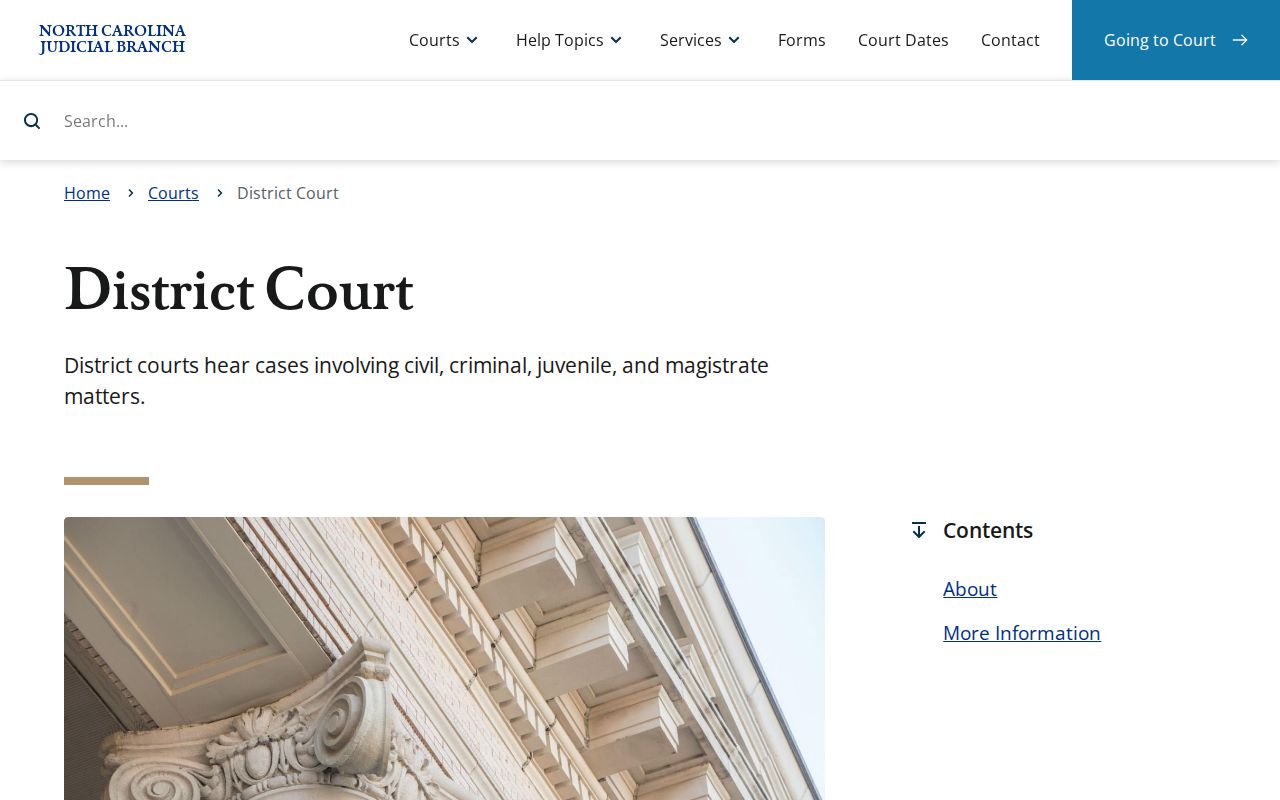
District Court and Superior Court sit in one statewide system. Their civil dockets can still reflect different jurisdictional routes. Confirm the division printed on the Duplin case record before assuming where the matter belongs.
Types of Civil Cases on Docket
North Carolina's civil subject-matter split is a practical first stop in any Duplin docket search. District Court holds exclusive original jurisdiction for civil actions at or below $25,000. Superior Court generally handles civil actions above that amount, plus other matters assigned by law. Magistrates hold small-claims jurisdiction within a statutory ceiling. The category and court label in a public Case Summary beat any guesswork. Do not rely on a claim's description alone.
| Duplin civil path | Typical role | Record point to check |
|---|---|---|
| District Court | Civil actions at or below the statutory division point and many statutory District matters. | Division, case type, events, and current calendar entry. |
| Superior Court | Civil actions generally above the division point and other Superior matters. | Case number, assigned division, motions, orders, and requested session. |
| Magistrate | Small claims and related statutory proceedings. | Civil Magistrate category and the public Clerk or Portal record. |
G.S. 7A-243 is the statutory source for the District and Superior civil division.
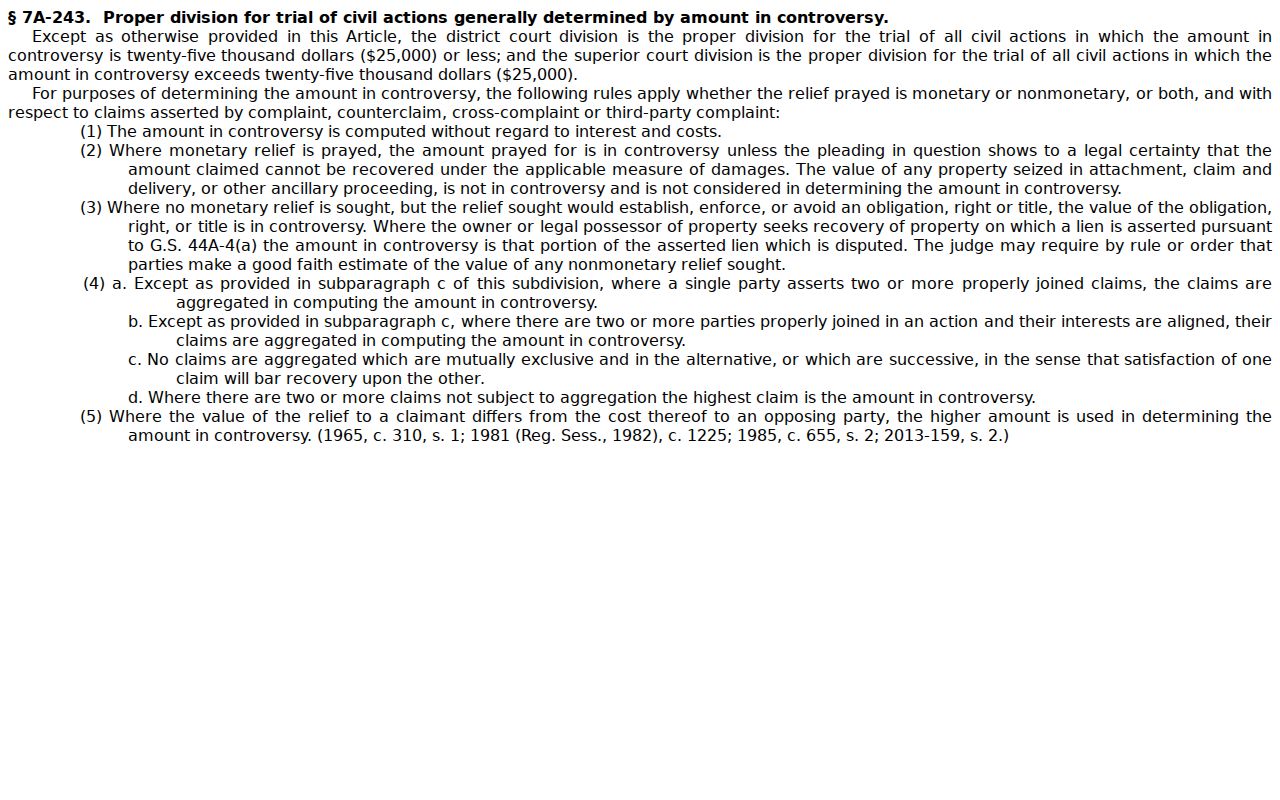
The threshold explains assignment, not merits. For what the court actually did in a Duplin civil case, review the case events and public orders.
Duplin Civil Setting Requests
Requesting a civil setting does not confirm one. The Duplin area's posted civil case-management rules are broad. They cover calendar construction, motions, continuances, inactive cases, and trial settings. For civil trials, the rules call for a request at least five weeks before the desired session. A final trial calendar is identified four weeks before the session. Motions ordinarily run on a shorter request process. Use the current local form and rules rather than a calendar assumption.
The Duplin Civil District Court Calendar Request carries civil and domestic-case prompts. The District Five Superior Court request form serves the covered Superior process. Both forms exist for participants seeking a setting. A reader checking a hearing already set has better tools. Portal Search Hearings or the published civil calendar will show what is on the schedule.
Article 19 of Chapter 7A sets out magistrate jurisdiction in statute, including the small-claims ceiling.
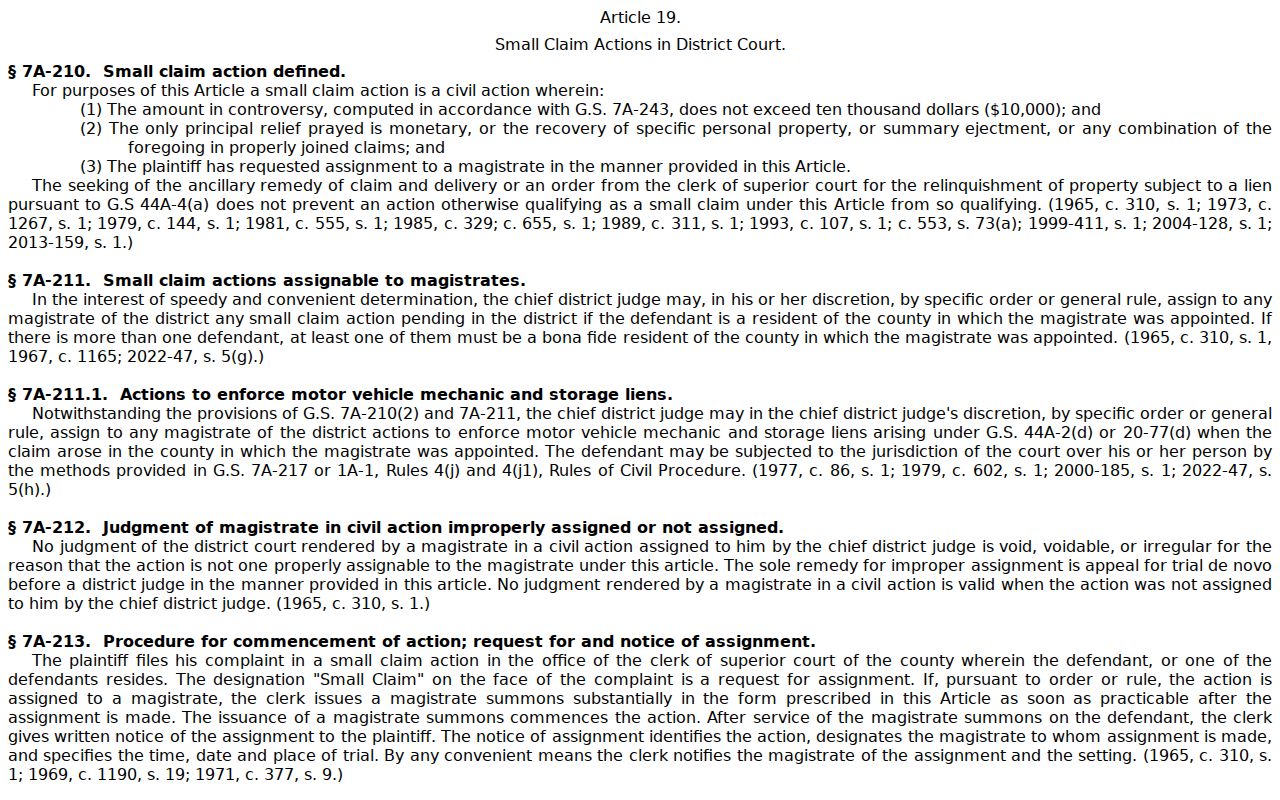
Magistrate jurisdiction is one reason a Civil Magistrate docket looks different from a civil case in District or Superior Court. It does not create a separate keeper of local court records.
Settings and Hearings on Civil Dockets
Duplin County civil hearings start with two calendars. The official Duplin civil calendar shows matters filtered to this county. Portal Search Hearings goes further. It lets you search a date range by case number, party, business, attorney, judicial officer, or courtroom. Before you drive to the courthouse, match the calendar entry against the Case Summary. The clerk runs the calling order. Items in one session are not always called in the order shown.
One caution matters here. A filed motion, a calendar line, or a hearing entry reserves nothing and decides nothing. Continuances happen. Calendars change. When a date or courtroom looks unclear, call the Clerk's office. Ask for the right calendar or division contact instead of guessing from a stale entry.
Duplin Civil Case Events
A Duplin County civil docket reads like a timeline. It usually opens with the filing. From there it moves through summons or other process, the service return, a responsive pleading or a default event, motions, and any public mediation or calendar note. After that come the hearing, an order or judgment, and sometimes an appeal. Later entries may show satisfaction or enforcement. One caution matters here. Words like filed, served, scheduled, or motion only record that something happened. They do not show that the court granted any relief. For the result, look for a later signed order or judgment in the case record.
- Service
- The record of delivery or attempted delivery of court process, distinct from a judgment on the claim.
- Continuance
- A postponement or movement of a setting. It is not a dismissal.
- Default-related event
- A procedural entry connected to a party’s response or lack of response, which still must be read with the resulting order.
- Inactive-case review
- A calendar-management step under local rules, not necessarily a final dismissal.
Public Access to Civil Dockets
Public access to Duplin civil dockets rests on a clear statute. G.S. 7A-109 lets anyone inspect the files, dockets, and indexes the clerk keeps. Another law can still close them. The portal can show public case information and any documents it makes public. Still, the Clerk of Superior Court is the office to ask for official certifications. Some records play by different rules. Family, probate, estate, and mental-health files may carry their own visibility limits. Sealed or expunged matters do too. If a document is missing online, ask the Clerk. Do not conclude it does not exist in any form.
Record-request boundary: A Duplin case file belongs with the Duplin Clerk. The statewide NCAOC public-record request route is for existing Judicial Branch records held by NCAOC and does not supply local court documents or local case information.
Under G.S. 132-6.2, a public-records request reaches records that already exist.
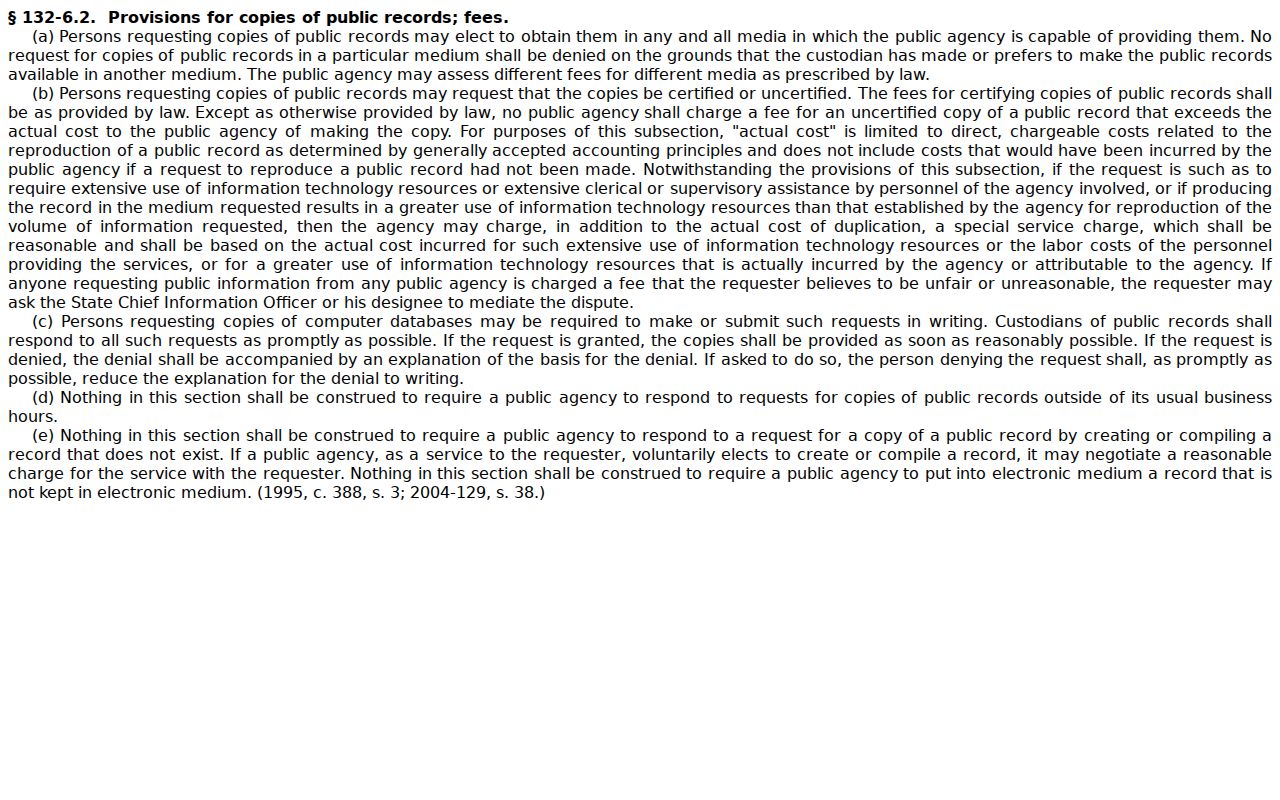
A narrow request gets better results. Ask for one public signed judgment, a named order, or the Register of Actions rather than every record in a Duplin case. Help the Clerk by giving the file number, the document type, the date, and your preferred copy format where you know it.
Duplin Civil Clerk Copies
When a Duplin County civil record will not resolve online, the Clerk's counter is the fallback. Staff there handle inspection of public files. They also handle searching at courthouse terminals, copy requests, and help with older records. Ask about the difference in copy types. An ordinary copy, a certified copy, and an exemplified record each serve different purposes. The Clerk can explain which one fits. Two portals cause confusion. Portal is a search and viewing channel for the public. File & Serve is the eFiling route for court participants, not a record-reading service.
Duplin County Clerk of Superior Court
Duplin County Courthouse
112 Duplin St.
Kenansville, NC 28349
Mail: P.O. Box 189, Kenansville, NC 28349
Weekdays, 8:30 a.m. to 5:00 p.m.
910-275-7000
Call ahead for the copy procedure, the right division, or current calendar routing. Before mailing any request or payment, check the Duplin payment information page. It bars cash and personal checks by mail. Use the Clerk's mailing address for an allowed request. The Judicial Branch request form covers NCAOC-held administrative records only, not local Duplin civil papers.